
How Long Does It Take to Form a Habit? Not 21 Days
The 21-day rule has no solid science. A London study found a 66-day median with a huge range. See what it really says and try a fixed-anchor tool tonight.
Key takeaways
- The 21-day figure began as a rough minimum from Maxwell Maltz, then got shortened into a promise.
- In the London study, the median was 66 days among 39 well-fitting participants, with a range of 18 to 254 days.
- What was measured is nearing 95% of an automaticity ceiling, not a finished habit on a set day.
- A habit rests on a stable cue, not a daily decision: tie a tiny action to a moment that repeats.
- One missed day did not break the path, but many missed days lowered peak automaticity; rejoin at the next anchor.
You started the challenge on the first of the month: thirty days of reading before bed. On day three you were fired up. On day five you were tired. On day six you got home late and fell asleep without opening the book. By day seven you had decided: "The challenge is over. I'll try again on the first of next month."
Sound familiar? What ended it was probably not the day you missed. It was a number you had been handed as the deadline: twenty-one days, or thirty. Once the line broke, the whole count felt void.
So how long does it really take to form a habit? The honest answer is longer, calmer and kinder to you than "21 days".
Where does the 21-day number come from?
The figure is old and is usually traced to Maxwell Maltz, a plastic surgeon who wrote Psycho-Cybernetics in 1960. Maltz noticed that patients took about three weeks to get used to a new face after surgery, and he called that a rough minimum.
Notice the word: minimum. Maltz never said a habit is finished in twenty-one days. Over the years the line was shortened to "habits form in 21 days" and turned into a promise on book covers and challenge apps.
So what you heard was a surgeon's clinical observation, not a measurement of everyday habits. For that, there is a study worth knowing.
What the study actually found: a 66-day median, not a deadline
In 2010, Lally and colleagues at University College London published "How are habits formed" in the European Journal of Social Psychology. They followed 96 volunteers, each of whom chose a simple behaviour to repeat daily in the same context, such as drinking water, eating a particular food or exercising. The follow-up lasted twelve weeks, and every day participants rated how automatic the behaviour felt.
The researchers then fitted a curve for each person to see when the behaviour approached the maximum automaticity that person would reach. Here are the details people usually skip:
- The 66 is a median: half the cases fell below it, half above. It is not an average and not a guaranteed date.
- It came from the 39 participants whose data fit the model well, not from all 96 volunteers.
- Estimates ranged from 18 to 254 days. The top figure is the curve extended beyond the twelve weeks, not a day anyone was observed reaching.
- What was measured was getting close to 95% of each person's automaticity ceiling. That means the behaviour became close to automatic, not that a "finished habit" arrived on a set day.
- It was a small study built on self-ratings of simple, regular behaviours, so it is not a rule for every habit.
In short: 66 days is a rough reference for a simple behaviour in someone whose data fit the model. It is more honest than 21, but it is not an order.
Why the number differs between people and between habits
The gap between 18 and 254 days is huge. A reasonable explanation is not that some people have stronger willpower, but that the conditions differ.
Within the same study, participants who chose eating and drinking behaviours reached automaticity faster than those who chose exercise (medians of 65 and 59 days versus 91), but that difference was not statistically significant, so do not build a verdict on it. What seems plausible is that a small action with a clear cue is easier to attach than a demanding workout, and that a steady day pins down timing better than a shifting one.
So instead of asking "how many days?", ask: how close is this action to happening on its own? You can tell from the inside. It is the moment you notice you have already started before you decided to.
A habit is a stable cue, not a daily decision
Why does "tonight's decision" kill habits? Because every evening you renegotiate: Should I read? Am I too tired? Can I start tomorrow? That negotiation burns the very energy you needed for the action.
In the simplest terms, a habit is a link between a cue and an action. When the cue repeats and the same action follows often enough, the cue alone starts to call up the action, and no question is left to ask. That is why repeating the same action in the same place and time matters more than the first burst of enthusiasm.
Routine also gives something beyond productivity. Research by Samantha Heintzelman and Laura King found that people whose days were more regular tended to feel their lives were more meaningful; those who said they do "pretty much the same things every day" saw more meaning in life. That is a correlation, not proven causation, but it is a reminder that a steady shape to your day is not necessarily a cage.
The "fixed anchor" tool: "After..., I do..."
If a habit needs a cue, choose one that already exists in your day instead of inventing one. This tool comes from the Arabic book Istiqala min Nafsik ("Resign from Yourself"), and takes about five minutes to set up.
The sentence is short on purpose. Once "After..., I do..." is fixed, you no longer have to ask yourself each night what you will do; the answer arrives before the question.
I missed a day: is everything lost?
No. This is among the most reassuring findings of the London study: missing a single day did not meaningfully weaken the path to automaticity, and the curve resumed climbing in the following days.
That does not mean nothing matters, though. The same study reported that missing many opportunities, even if spread out, lowered the highest level of automaticity reached. And what was tested was one missed day, not a month-long break.
The thirty-day challenge that collapses on day six did not fail because you are weak. It failed because it was built like a contract: every missed day voids it. A habit is not a contract. It is a path you can rejoin at the next cue, without erasing what came before.
The two-minute exercise to start tonight
Do not wait for the first of the month. Do this now; it takes under five minutes:
- Write on a sheet: "After ______, I ______" (two minutes). Fill the first blank with a moment that will really happen tonight.
- Choose an action of two minutes or less. If it feels too small, it is the right size.
- Put what you need at the anchor now, not tomorrow (one minute).
- Do it once tonight and mark the date.
And do not try to count to day sixty-six. Just notice: when does the action start before you negotiate with it? When that happens you are close to automatic, whether it is day thirty or day ninety.
If you find that difficulty keeping any routine comes with a persistently low mood or a loss of interest in what you used to enjoy, talk to a mental-health professional; that is not something a tool in an article can handle.
This idea sits at the heart of chapter two, "Willpower is not the hero of the story", in the Arabic book "Istiqala min Nafsik": a habit does not ask your willpower for permission, it asks for a cue that repeats. If you like the tool here, the chapter builds it through everyday scenes and carries its steps further.
If you lead a team and see new habits wither at the first interruption, the same principle applies to them. Read more in the Arabic book "Al-Modeer Al-A'ma" (The Blind Manager).
Tonight there is one moment that will repeat anyway. Name it, put the small action right after it, and begin there.
Frequently asked questions
Is it true a habit forms in 21 days?
No. The number usually traces to plastic surgeon Maxwell Maltz, who offered it as a rough minimum, not the time a habit takes to finish.
What does a 66-day median mean?
Half the cases in the study fell below it and half above. It came from 39 participants whose data fit the model, with estimates from 18 to 254 days.
Does missing a day ruin my habit?
In the study, a single missed day did not meaningfully affect the path to automaticity. Many missed days did lower the peak reached, so rejoin at the next anchor quickly.
Does the number apply to every habit?
No. The study was small, relied on self-ratings and used simple behaviours. Treat the number as a rough reference, not a deadline.
When should I see a specialist?
If trouble keeping routines comes with persistent low mood or loss of interest in what you used to enjoy, talk to a mental-health professional.
Sources
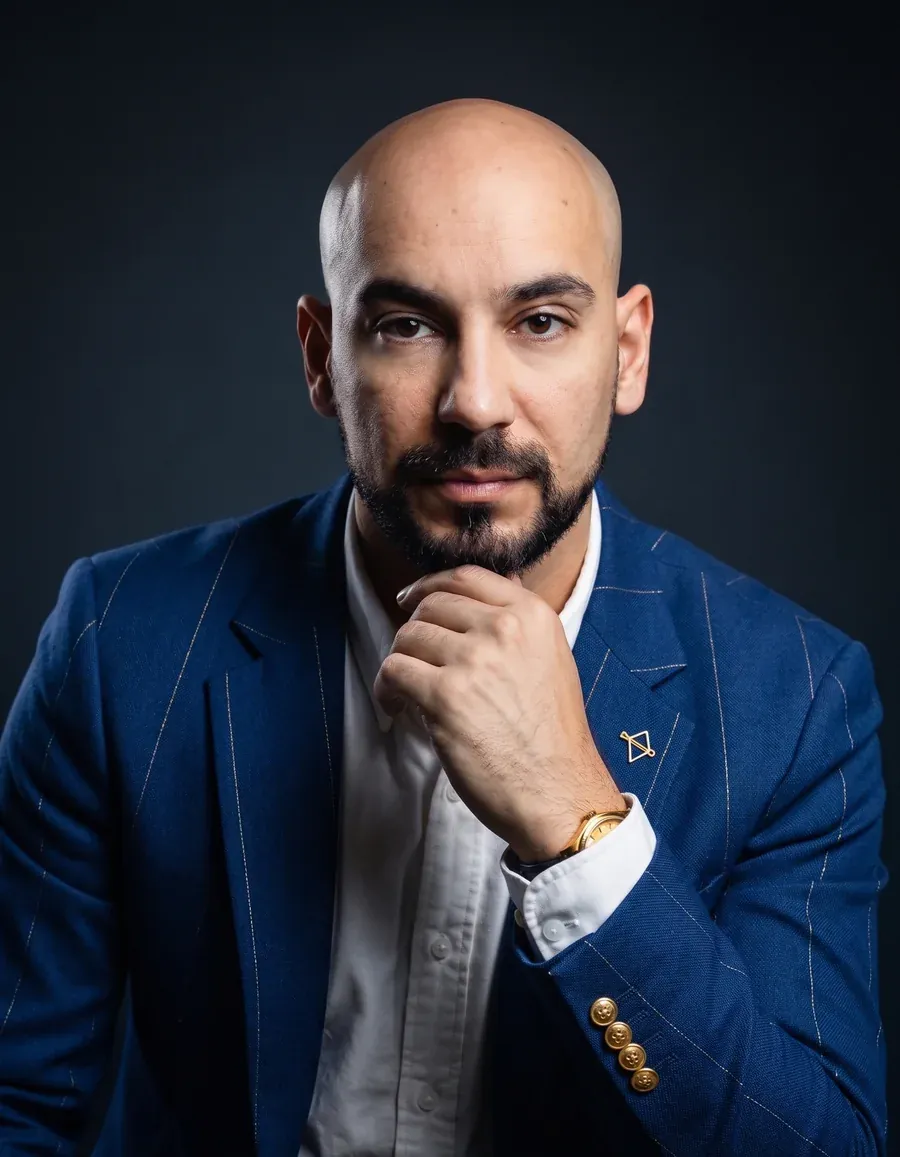
Mahmoud Fasfos
CTO & COO · Author
Technology leader with 15+ years across Saudi Arabia, Canada and Jordan, working on AI, cybersecurity and project delivery. Author of «The Blind Manager» and «Resigning from Yourself».